Intro
This sort of essay grew out of a list I made on a comics forum called league of comic geeks, I know, I’m ashamed for that name too – dies in laugher- however, from that list, I felt that these were stories that in some way or another disturbed me, fascinated me, or simply lingered in my mind long after I closed the book or, turn off my tablet. I mostly feel like horror can also be an enjoyable thing, from movies to comics, I always was a big horror fan.
I often feel people like horror for the adrenaline rush fear gives them, but for me, what always interested me, was how horror operated throughout the different mediums, in this particular case, through comics.
Here, the shock doesn’t come from the sound, or motion really, but from the silence, the rhythm of the panels, and particularly from the pacing of the reader, the simple act of turning a page.
It’s in that time space, between what’s shown and what’s to come, that horror breathes and really takes hold.
Blue in Green
Music and the past that still echoes
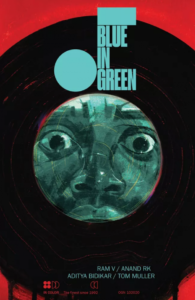
Some stories don’t scare us with monsters or blood really, but with the echo of who we used to be. Blue in Green, by Ram V and Anand RK, is one of those silent horrors I mentioned in the intro, it’s in its core, a slow descent into artistic obsession and the guilt that follows anyone who tries to create something that outlives them. The story begins with music but quickly deepens into something far more unsettling, here jazz becomes something like a haunting presence across every page. The artwork, initially a bit disorienting, soon becomes essential to the story.
The blurred lines and faces really mirror the main character’s mind, as if talent itself were a curse taking form, which is really what this is. Here, the main character is trapped between the hunger for transcendence and the weight of the past, every attempt to touch greatness comes with a cost, like loneliness or regret, and the fear that what he’s inherited isn’t just talent, but a personal haunting.
The horror here doesn’t emerge from the supernatural, but from the self: the idea that sometimes genius can devour the one who chases it. In the end, Blue in Green isn’t just a ghost story, it’s a confession. It speaks of the artist who listens too closely to perfection, only to hear the echo of what was lost. And in that echo, the horror lingers in a way that it’s intimate, quiet, and impossible to forget.
Everything Dead and Dying
Decay as the landscape of the post-apocalypse
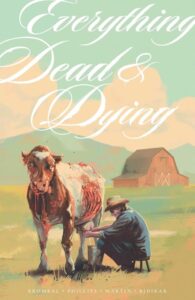
It may be early to talk about this series, but it’s impossible to ignore it or to leave it out of any list of horror comics. Comparisons to ‘The Walking Dead’ are unavoidable, yet the focus here is different. While Kirkman’s series explored society falling apart, ‘Everything Dead and Dying’ shifts into something more introspective. It’s about the self enduring collapse, surviving day after day in a world that’s long since ended, trying to normalize the absurd. The art here is phenomenal, every page reeks of decay, the colors, textures, and lines seem to decompose as you read.
Here, the horror doesn’t come from gore in itself, although it helps, but from the oppressive persistence of a world too stubborn to stay dead. It’s definitely a horror story with heavy emotional weight, maybe less about fear, and more about the slow erosion of everything, inside and out. I mean, this is so good. You can practically hear Jack shovelling that dirt in the opening pages, this is the kind of horror that lingers long after the last panel.
If ‘The Walking Dead’ showed how people break together, ‘Everything Dead and Dying’ shows how someone decays alone. This is slow-motion extinction, a lucid nightmare about the end, and what remains human when everything else has already decomposed.
Harrow County
Rural horror, coming of age, and the roots that haunt us
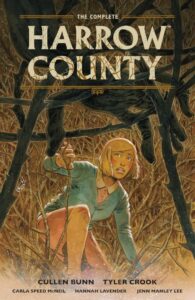
Among the books that crawled under my skin, ‘Harrow County’ stands out for an odd reason, it made me feel safe. For a horror comic, that’s a strange feeling. At first I wasn’t even sure it belonged in this list. But something about the image of a child growing up misunderstood, surrounded by ghosts both literal and emotional, stayed with me. Maybe I’m just projecting too much meaning into it, but that’s part of what makes this book work, I think it invites you to.
Beneath its folkloric witchcraft and southern gothic tone, there’s an universal hunger for identity, for roots, and for finding a place in a world that doesn’t quite know what to do with you, those are some of the subliminal themes I found while reading it. The art just amplifies that intimacy which I have written about, from the drawing to the color palette that feels like autumn light, story and art blend perfectly together.
When I first decided to read this for the first time, I went in blind. Everyone talked about how good this was, without reading anything else about it, I decided to pick up the recently released compendium, and was surprised it was about witches. I never would have guessed that from the cover alone, once I entered its world, I tore through the book faster than I expected, and I didn’t want it to end.
‘Harrow County’ lingers because it reminds us that horror isn’t only about what we fear, it’s about what we long for, family and belonging.
Hellblazer #41-46 (Dangerous Habits)
Smoking, addiction and mortality
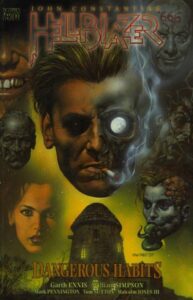
I decided to include this run of single issues because it forms a compact story within John Constantine’s world as Hellblazer. It keeps the literary tone that defines the character, but tackles something brutally real, cancer, and especially the habits and addictions that so often drag us towards ruin. Even when we stare the consequences in the face, we let ourselves slip back into habits that eat at us, and compromise the little time we have. In Constantine’s case, it’s cigarettes, a vice whose damage is painfully obvious. In other cases, the danger can be less visible and, in its subtlety, easier to ignore or pretend we do not see at all. For me, that is real horror.
Orla!
Body image and self-perception
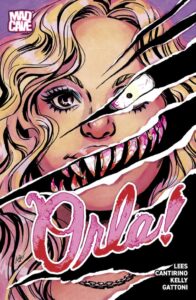
I picked this up expecting simple horror fun and instead found something layered and unexpectedly tender.
The story and art move so well together, that it becomes obvious this is more than just another comic thrown out there. You can read this through a few different lenses, more literal, or more figuratively. At its core, it explores themes like womanhood, body image, insecurity, the modern dating scene, and that toxic blend of machismo and distorted masculinity that so many young men bring to their relationships with others. It’s a book that touches on these themes, some of you would call ‘woke’, without actually being it.
Orla may be a literal monster in the comic, but figuratively she embodies how she sees herself through social pressure and the gaze of others. The monstrous figure she transforms herself into, reflects her distorted self-perception, but underneath all these layers she has and has acquired, deep down, she is a hopeless romantic trying to navigate through her complicated life. Ultimately, I would label this as ‘intimate horror’, the kind where your own body turns unfamiliar and other people’s eyes do the real damage.
Outcast
A story of possession, isolation, and the weight of faith
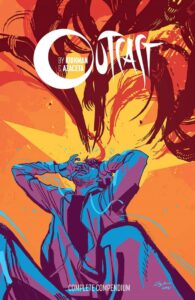
I’ve always been drawn to horror across different mediums. You probably figured that out by now, so I don’t need to spell it out. When I got into comics, I naturally researched the best titles to start with in the genre I’ve always loved, and ‘Outcast’ kept showing up.
This story is about Kyle Barnes who, put very simply, is a magnet for demonic possession. But there’s much more to it. It’s essentially a slow-burn supernatural drama, which made me enjoy it even more because it gives you time to actually care about the characters.
I remember watching ‘The Exorcist’ a long time ago and how it made me feel scared, but it was also strangely raw and visceral. Naturally this book didn’t scare me, but the rest of those feelings were still there, mostly because this is a horror that taps into the fear of the unknown, the fear of losing control of your own body, and all the consequences that come with that idea.
One deeper thread among the many this comic presents is that faith can be an unreliable tool. Throughout the book we see this again and again, and by the final act, that idea is completely cemented. The art was mesmerizing in a way that felt appealing and synced perfectly with the book’s vibe and the story as a whole. Here, what lingers after the last page is not only a story beautifully crafted by Kirkman and Azaceta, but an unsettling reflection on trauma, faith, and the ways they shape people.
The Plot
Inheritance and what trauma becomes when no one faces it
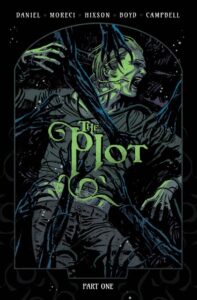
I wanted to include this entry because the book has more substance than it lets on at first glance. The swamp creature isn’t exactly new if you think about it, but what it represents here gives it real emotional weight. The story uses that almost primal kind of horror to talk about something very real, the things passed down through a family when no one before you ever had the courage to face what needed to be faced.
The book shows how trauma, guilt, and silence move from generation to generation, not through any kind of magic, but through the way people live together. Parents, grandparents, and other family members who never dealt with their own pain end up passing it on, whether through how they raise their children or the emotional environment everyone grows up in. In this story, all of that becomes a curse that drags on for decades, gathering a physical mass until it takes the shape of that swamp monster haunting the Blaine house.
Halfway through the book it becomes very clear that as long as no one breaks the cycle, the same kind of darkness will keep existing. That’s where this becomes a real horror story. The real threat isn’t the swamp monster, it’s the refusal to confront problems until they become impossible to ignore. Only when someone finally chooses to face the past and take responsibility for what was left behind is there any chance of change, even if the cost is high.
In the end, I’d say the book leans toward supernatural horror but works as a metaphor for emotional inheritance. When it reveals that the monster is really everything the family tried to hide and suppress for generations, the story lands with an emotional weight that lingers long after the final page.
The Walking Dead
Sociology of collapse
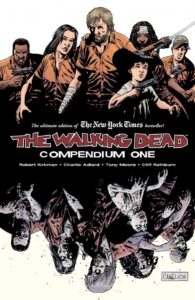
What pulled me into this comic was the show, obviously. I remember watching the first four seasons of The Walking Dead a long time ago, so when I started reading comics about three years back, I naturally wanted to give this a try, especially after reading Outcast and realizing just how strong Kirkman’s writing can be.
I was pleasantly surprised when I started this. Even though it’s black and white, which I’m usually not a huge fan of, it works incredibly well for this story. It makes everything feel grittier and more grounded, the visuals syncing perfectly with the tone. Still, if you really can’t stand black and white, there’s The Walking Dead Deluxe, which is the colored version.
At its core, this is about how society tries to hold itself together during collapse. Sure, there are zombies and the whole world is shaped by the apocalypse, but the focus is on people, how they navigate chaos, and how their relationships shift and evolve under pressure. Honestly, it feels like something you could study in a sociology class.
That’s the beauty of this horror comic. The others I mentioned earlier, left behind specific horrifying ideas, this one hits differently. Even though the thought of this happening in real life is terrifying, the fantasy elements create just enough distance to let me enjoy the book for what it is, a story about how people interact, adapt, and survive together.
The pacing is perfect, and the art, as I said earlier, fits the story so well. Here, what lingers after the last page is simply how good it is, and that’s pretty much it.
Conclusion
Horror comics don’t really let you walk away clean. Even the quieter ones leave a mark, something small that sticks to you long after the cover closes. These books all did that for me in different ways, whether through guilt, decay, loneliness, or the strange comfort that comes from seeing your own fears twisted into something you can finally look at. Maybe that is the real reason I keep returning to this genre. Not for the jump scares, not for monsters, but for the ways horror turns our inner mess into something you can hold in your hands, page after page. If a story manages to crawl under your skin and stay there without asking permission, it deserves to be remembered. And these are the ones I won’t be shaking off anytime soon.
Written by Daniel Ferreira
Edited with assistance from AI writing tools.
Revised by Mariana Pires